Introduction
Digital transformation means integrating digital technology into every aspect of a business to fundamentally rewire how it operates [1],[2]. In practice, this isn’t just about going paperless; it’s about rethinking processes, business models, and customer experiences. For example, many organizations now replace fragmented spreadsheets and manual checklists with automated workflows and centralized systems. As McKinsey notes, digital transformation aims to build competitive advantage by deploying technology at scale improving customer experience and lowering costs [3]. In fact, roughly 90% of companies today are undertaking some form of digital transformation [4]. For owners and operations managers, this shift is critical: faster decisions, fewer errors, and greater agility can make or break a business in real estate, trading, construction, and beyond.

Automating processes yields major efficiency gains. Tasks that once required manual data entry, like moving a project from “To Do” to “Done”, can now flow automatically through a system. The automation of business processes leads to significant gains in efficiency, since repetitive tasks such as data entry or order processing can be handled by the software instead of by hand [5] [6]. In this way, digital workflows reduce delays and human error, freeing staff to focus on higher-value work.
The Role of ERP Systems in Modern Business
Enterprise Resource Planning (ERP) systems are the cornerstone of this digital transformation. An ERP acts as a centralized platform for all core business functions, finance, inventory, sales, CRM, projects, and more; ensuring that every department works from the same up‑to‑date data. ERP systems standardize internal processes and eliminate information silos [7]. For example, instead of separate teams keeping disjointed spreadsheets, an ERP stores all information in one place. When data is centralized and standardized, managers gain a “single source of truth” and a holistic overview of the business [8] [9]. This transparency enables faster, data-driven decision-making: a sales manager can see real-time stock levels before promising a delivery, or a CFO can review consolidated financials without hunting through multiple reports.
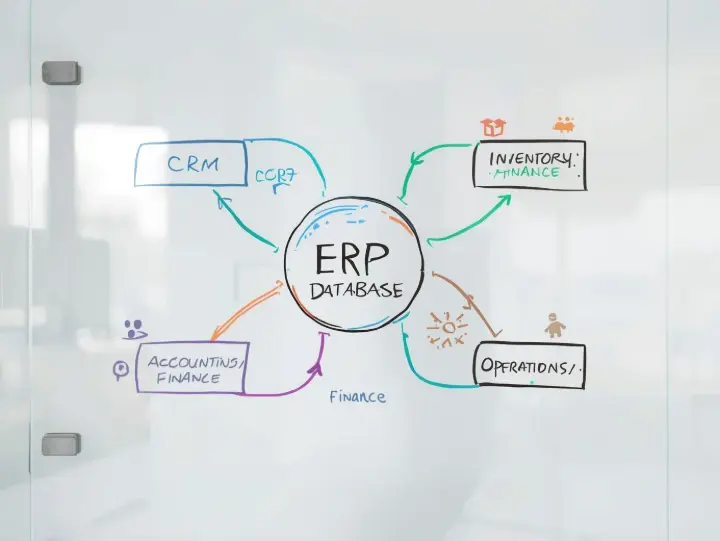
Such integration lets information flow seamlessly for example, a sales order automatically updates inventory and triggers an invoice. Modern ERPs (like Odoo) can automate these workflows so that actions in one area trigger updates in others. As one analyst explains, ERP-connected workflows can handle processes such as order processing, invoicing, and inventory control without manual intervention [10]. This means that when a trading firm receives a purchase order, the system can automatically reserve stock, update the accounting ledger, and even email the customer a confirmation, all without extra human steps.
Odoo ERP, for instance, is designed as a modular, flexible platform tailored to businesses of any size [11]. Companies can mix and match modules (apps) for accounting, sales, purchasing, warehouse management, project management, CRM and more. With Odoo, every department works on one platform: sales sees the same customer data that accounting does, and field service knows the same inventory levels as the warehouse. Centralized data and built-in analytics give decision-makers real-time insight into key metrics. For example, a project manager in construction can pull up the latest project budget vs. actual costs; a real estate manager can get instant visibility into contract status and maintenance schedules. By eliminating duplicate data and manual handoffs, ERP systems drive productivity and reduce errors [12] [13].
Custom Software and Mobile Apps: Tailoring to Unique Needs
While ERP provides a solid backbone, many businesses have unique requirements that call for custom software especially in industries like construction, real estate, and trading. Custom web or mobile applications can fill gaps and provide specialized interfaces, while still syncing with the ERP. Because custom software is built to fit the company’s existing tech stack, it can “link systems together” via APIs and dedicated connectors [14]. In practice, this means a custom app can push and pull data from the ERP in real time.
For example, a construction firm might deploy a custom mobile app for site supervisors to log daily work and resource usage. As the foreman updates tasks on the mobile app, those entries feed directly into the ERP’s project management and inventory modules, keeping everything up to date. Similarly, a trading company could have a bespoke dashboard for monitoring market prices or a client portal for order tracking all connected back to the core ERP. By integrating these custom tools, businesses avoid disjointed workflows and manual data entry [15]. Over time, such custom applications evolve with the business: new features can be added without disrupting existing processes, and interfaces are built for how people actually work [16] [17].
Use Cases: Automation in Action
Digital transformation and ERP adoption lead to powerful, concrete improvements. Here are a few examples relevant to our audience:
- Automated Invoicing and Accounting. Instead of manually creating invoices from sales orders, the ERP can generate and email invoices automatically when orders are fulfilled. Payments and receipts are tracked in real time. This automation reduces billing errors and speeds up cash flow.
- Inventory and Supply Chain Management. An ERP can continuously track stock levels across warehouses. For instance, barcode scanning or IoT devices update inventory counts immediately. Procurement orders can be triggered automatically when supplies run low. According to Odoo experts, such integrated workflows (order processing, invoicing, inventory control) can be optimized “without requiring manual intervention" [18].
- Construction and Project Tracking. A contractor can use ERP project modules to plan tasks, schedule resources, and budget costs. Field staff enter progress via a mobile app, and the ERP consolidates this data for managers. Automated alerts (e.g. budget overruns or delays) help teams react quickly. In real estate development, an ERP can link CRM (lead tracking) with project timelines, so client requests automatically inform scheduling and financial plans.
- Reporting and Dashboards. With all data centralized, ERPs provide real-time reports. A stakeholder can pull up dashboards showing KPIs across finance, inventory, sales and operations. Rather than preparing manual reports, decision-makers see a live view of performance and trends. This visibility into the “entire company” is one of the core ERP benefits [19] [20].
These scenarios demonstrate how custom software and ERP together modernize workflows. Whether it’s auto posting an invoice, issuing a purchase order, or updating a project plan, each step moves automatically through the system. By contrast, in a “before” scenario without ERP automation, each of these tasks would require separate actions in different systems or even on paper. The digital, automated “after” version eliminates those gaps.
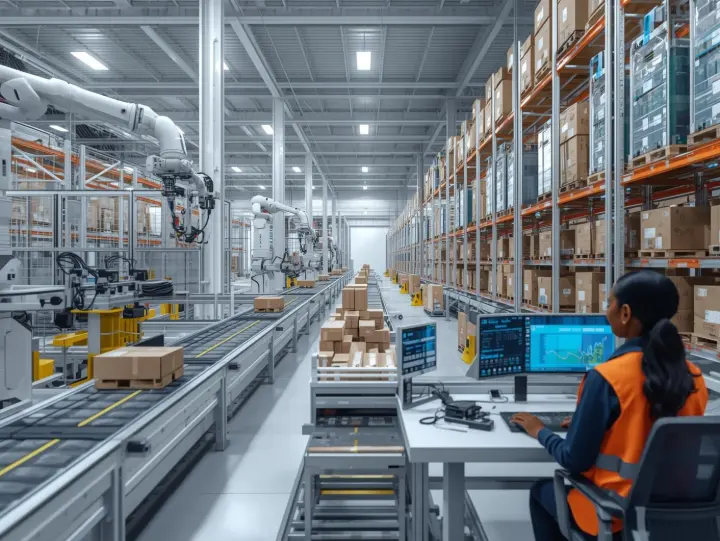
In practice, an ERP-equipped trading business could use barcode scanners and mobile devices to track stock in real time, feeding data directly into the ERP. The image above suggests a streamlined, high-tech storage environment. Compared to a manual spreadsheet-based process, this kind of automation can slash errors and labor costs, and ensure accurate, real-time inventory visibility [21] [22].
Business Benefits: Efficiency, Scalability, Cost Savings, and Agility
Adopting ERP and automation isn’t just a technology upgrade it translates into measurable business benefits. In short, companies become faster, leaner, and more flexible. Key advantages include:
- Increased Efficiency and Productivity. By automating routine tasks, employees spend less time on data entry and searching for information. For example, an accountant no longer needs to re-key every invoice because the system updates everything automatically. This leads to major productivity gains [23] [24]. Businesses often find they can do more with the same staff, or delay new hires while output grows.
- Better Decision-Making through Visibility. With all data centralized, managers have full visibility. Decisions are made using real-time insights rather than outdated figures. Faster, data-driven decisions mean fewer costly mistakes for instance, ordering inventory only when needed and avoiding overstock. As one ERP guide notes, having accurate, consolidated information “allows decision-makers to gain a holistic overview” of the business [25] [26].
- Scalability and Flexibility. Modern ERPs are designed to grow with the company [27]. You can add users or new modules (e.g. a new subsidiary, currency, or product line) without a rip-and-replace. Cloud-based ERP solutions make it easy to scale resources as demand grows. This flexibility means the technology supports growth plans, not limits them.
- Cost Savings and ROI. A primary motivation for ERP is cost reduction. Automated workflows “can reduce or even wipe out many administrative costs” [28]. Gone are the inefficiencies of manual paperwork and duplicated systems. The combination of labor savings reduced errors, and better planning often means the ERP pays for itself quickly. For many businesses, ERP automation delivers a fast return on investment.
- Agility and Competitive Advantage. Perhaps most importantly, digital processes make a company more agile. With a robust ERP in place, new business areas or changes in the market can be handled swiftly. As Odoo experts point out, companies using ERP “can respond more quickly to market changes or shifts in their industries. With a robust ERP infrastructure, workflows can be adjusted more rapidly” [29]. In other words, digital transformation isn’t a one-off project it’s an ongoing capability that keeps the business nimble.
Each of these benefits' efficiency, visibility, scalability, cost savings, agility directly impacts the bottom line and the ability to compete. By contrast, businesses that stick with manual processes risk falling behind. In industries like real estate, trading, and construction, where margins can be tight and change is constant, the edge provided by digital systems is especially valuable.
Conclusion
Digital transformation and automation are no longer optional for growing businesses – they are essential. By implementing an ERP system like Odoo, and complementing it with custom web or mobile solutions, companies can eliminate outdated manual workflows, unify their operations, and unlock new levels of performance. The result is a leaner, more scalable organization with faster processes, clearer insights, and lower costs.
If you’re ready to modernize your business operations whether it’s automating invoices, tracking inventory in real time, or building custom apps for your team now is the time to act. Contact One Stop System for a consultation. Our experts can show you how an integrated ERP and tailored software solutions will make your processes more efficient and your business more agile. Let’s discuss how to transform your operations and gain a competitive advantage in 2025 and beyond.